If you've been in trucking long enough, you've probably heard stories — a carrier with great pay promises, solid-looking equipment, and a clean-looking DOT number that somehow feels off. Maybe the company was around for six months before everything fell apart. Maybe drivers didn't get paid. Maybe the safety culture was a disaster.
There's a name for this now, and it just made national headlines.
What Is a Chameleon Carrier?
A chameleon carrier is a trucking company that illegally reopens under a new name and DOT number after being cited or shut down by the Federal Motor Carrier Safety Administration. Land Line Media Same owners. Same trucks. Same drivers. New name, clean record on paper.
According to trucking safety consultant Rob Carpenter, who has tracked these operations for years, the playbook is straightforward: run the company into the ground, rack up violations, then "abandon the history" by switching to a new carrier identity — effectively wiping hundreds of violations with a single DOT number change. CBS News
Data from Fusable shows that chameleon carriers are four times more likely to be involved in severe crashes Land Line Media — meaning if you're driving for one without knowing it, you're putting your CSA score, your CDL, and your life at risk.
This Isn't a Niche Problem
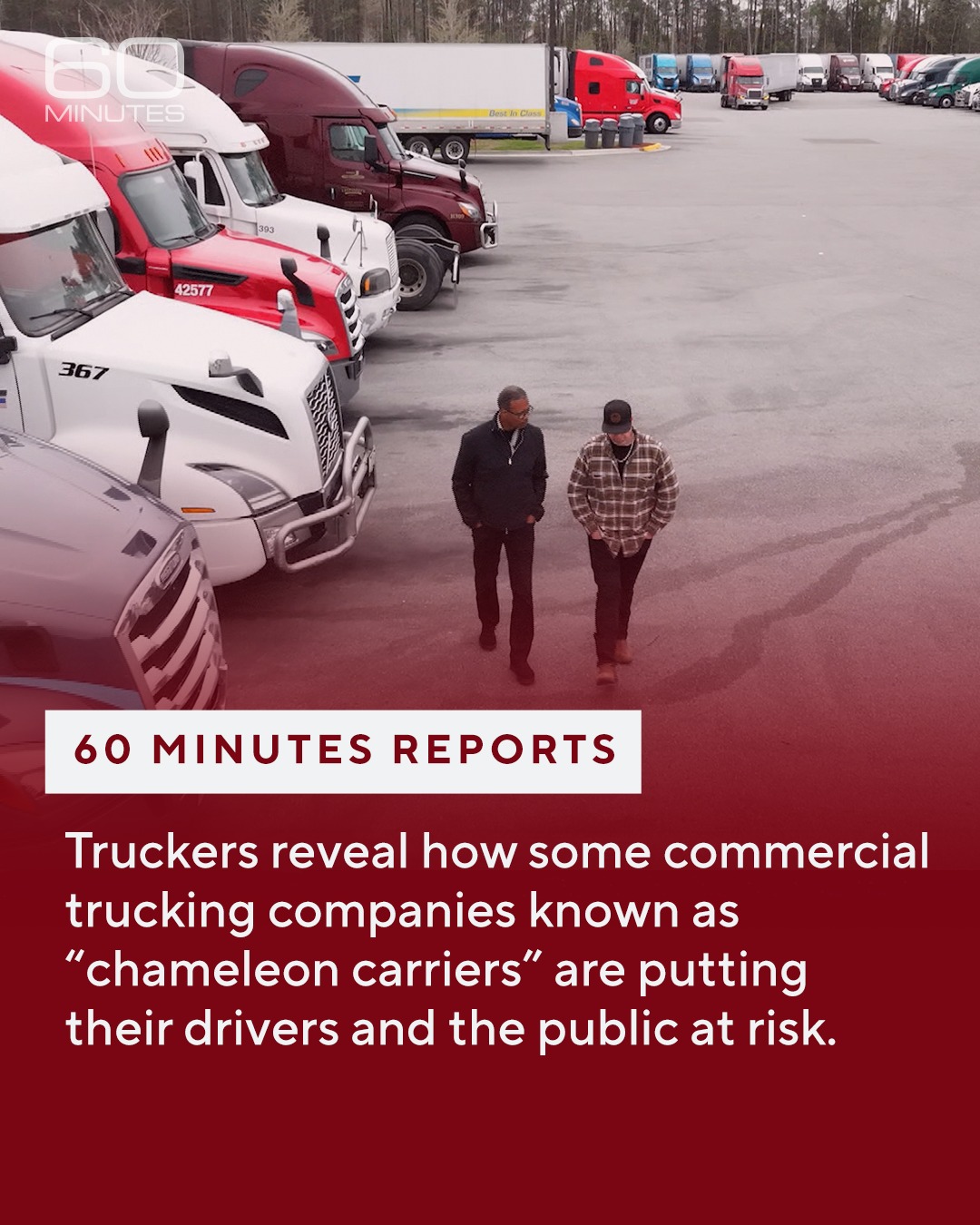
On April 12, CBS News' "60 Minutes" ran an eight-month investigation into chameleon carriers — specifically into Super Ego Holding, a network of trucking and leasing companies with ties to Serbia and the U.S. that is currently under federal investigation and named in a class action lawsuit. CBS News
When a story like this hits "60 Minutes," it means the problem has reached a scale that can't be ignored. And it's been growing. Rob Carpenter noted that these schemes have surged since the pandemic. CBS News
The FMCSA knows it's a problem too. FMCSA Administrator Derek Barrs acknowledged the agency has a "front door problem" — the goal is to stop bad actors before they get into the system in the first place. Land Line Media New legislation is also in the works: Rep. Harriet Hageman introduced the Safety and Accountability in Freight Enforcement (SAFE) Act, which would direct FMCSA to conduct a study of chameleon carriers and test automation tools to identify bad actors at the registration stage. Land Line Media
Regulation is catching up — but it takes time. In the meantime, the responsibility still falls on drivers to protect themselves.
How CDL-A Drivers Can Protect Themselves
The freight market is tightening right now. Driver availability is tightening at its fastest pace in several years, spot and contract rates are rising, and capacity is contracting ACT Research — which means carriers are competing harder for quality drivers. That's leverage in your pocket. Use it.
Here's how to vet a carrier before you commit:
1. Look up their FMCSA safety record directly. Go to safer.fmcsa.dot.gov and search the carrier's DOT number. Check how long the authority has been active. If a company claiming to be established only has a DOT number from 12–18 months ago, ask why.
2. Cross-reference the company name and ownership. Search the carrier name alongside terms like "safety violations," "shutdown," "FMCSA out of service." A name change doesn't erase what people wrote about the old company online.
3. Talk to current drivers. Facebook trucking groups, Reddit's r/Truckers, and even Google Reviews can surface real driver experiences. If drivers are complaining about not getting paid, abandoned equipment, or pressure to falsify logs — those are red flags, not isolated incidents.
4. Ask direct questions during recruiting. A legitimate carrier will answer questions about their safety rating, CSA scores, equipment age, and pay structure without hesitation. If a recruiter gets evasive when you ask about their DOT history or safety record, that's your answer.
5. Check insurance certificates. Before you commit to a lease or sign anything, verify the carrier has valid cargo and liability insurance. Chameleon carriers often operate with lapsed or fraudulent coverage.
The Market Conditions Right Now Make This More Important
Here's the thing: you don't have to settle. The trucking market is in a supply-driven tightening phase — capacity is shrinking, rates are rising, and carriers genuinely need quality CDL-A drivers. ACT Research The power dynamic has shifted. Good carriers are competing for drivers like you.
That means you have more options than you think. Taking the first offer from a carrier you haven't fully vetted isn't necessary — and it could cost you your CDL, your safety record, or worse.
At OTR Express Group, we only place drivers with carriers we've vetted. No chameleon operations. No mystery DOT numbers. No pressure to overlook red flags.
If you're looking for OTR work with a carrier that's transparent about pay, safety, and expectations — reach out to us. We'll do the homework so you don't have to.
OTR Express Group connects CDL-A OTR drivers with reputable, verified carriers across the U.S. Interested in your next run? Get in touch today.